Thursday, November 08, 2012


Charles Stuart (Charles I) was beheaded at 2pm on Tuesday, 30 January 1649 at Whitehall in front of the Banqueting House*. I know because I was there and even though the soldiers tried to prevent us reaching the scaffold we slipped in and out of the grown-ups and the cattle till we came to the edge of the crowd. There we watched the whole thing while we ate our trenchers**. Well they weren’t originally ours but the monks were handing out alms*** as we passed by them. The trenchers had obviously come from a noble house being thick and large and were now softened with the juices and gravies of the meal they had held which I think was some kind of fish stew. They were still fresh or at least there was nothing crawling across, (or in) them. Whilst nobody doubted that the alms were handed out in good faith, it was true that many a poor soul had come to a bad end after eating one that was rancid or worse still; poisonous. But such are the offerings of charity and we poor must be thankful. Well that’s what they keep telling us at any rate.

Poor King; he looked calm and dignified as they walked with him to the scaffold but it seemed he was stupefied as though he couldn’t quite imagine the deadly charade was to be played out for the first time in his life, for the satisfaction of others. How could he be judged by his inferiors? Was he not God’s appointed ruler and so who but God, may remove him from office****. The axe fell but we didn’t actually see anything because the guard caught us and led us away. But in the spirit of charity I gave what was left of my trencher to the pig that was grubbing around in the dirt beside me.

 
* The Palace of Whitehall (or Palace of White Hall) was the main residence of the English monarchs in London from 1530 until 1698 when all except Inigo Jones's 1622 Banqueting House was destroyed by fire. Before the fire it had grown to be the largest palace in Europe, with over 1,500 rooms, overtaking both the Vatican and Versailles. The palace gives its name, Whitehall, to the road on which many of the current administrative buildings of the UK Government are situated.


** Trencher - A piece of thick stale bread used as a plate. At the end of the meal, the trencher could be eaten with sauce, but was more frequently given as alms to the poor. At the end of the meal, the trencher could be eaten with sauce, but was more frequently given as alms to the poor. Later the trencher evolved into a small plate of metal or wood. People used this utensil to eat the many stews and porridges that made up their daily diet.
***The giving of 'alms' is an act of charity toward those less fortunate.
****Republicanism had brief 11 year tenure in Britain between the death of Charles I and the usurpation by Cromwell (who assumed title of Lord Protector for 5 years) against the Long Parliament. In the final analysis the monarchy never regained the heights of power it had experienced under the Tudors and early Stuarts and nor was a pure republican form of government ever to be in full effect even to the current day.
 

Sunday, November 04, 2012

These will be the last autumn colour pictures I'll probably take (collective sigh of release)


Chicken Soup

1 large chicken carcass and trimmings
3 inch of clean green tops from 3-4 leeks
2-3 cloves garlic
2 carrots
1 stick celery
½ pint of chicken stock
¼ pint double cream
4oz chopped, cooked chicken thigh meat
Salt and pepper to taste
Small sprig of Thyme,
1 Bay leaf
Parsley

Method
 
Place chicken carcass in a pan, add stock with crushed garlic gloves, thyme sprig, bay leaf and vegetables and enough water to cover, bring to boil and simmer for 2 -3 hrs on a gentle heat. Strain mixture and retain only the strained liquid. Add cream and cooked chicken then cook gently for a further 5 minutes seasoning to taste. Add Parsley before serving.

Tip:
  • Once cooled the soup should appear to be quite thick but once reheated it will regain its proper consistency. Do not be tempted to dilute soup before reheating.
  • If the soup tastes a little weak simmer gently to reduce its volume before adding chicken and cream.

Variations:
  • Substitute chicken elements of the recipe for mushrooms and use vegetable stock.

Though the wall of truth we built now proves less strong that our vanity made it and though days of wonder, peace and hope shall never again be reborn; ride not into battle now without armour. For comes softly tonight the mountain wind to lay the scent of the world on our sleep. To placate troubled minds and transcend those first breaths that ever we drew when gazing upon the world with a new imagination. For twas then we became free as the air itself; to move in waves across a clouded outlook. The day is now come, the old land is ever to be lost and though we men sigh and the women lament this terror, ever we knew; it would always come to this

 © Edetric Vistal

Friday, November 02, 2012


Bread and Pyramids on the Giza Plateau 2555 BC

Starlight through an opening in the hut wall was my awakening radiance unless the moon goddess was in the mood to visit us. Hemetra my wife (Honour of Ra) was asleep and I would not wake her so early. She was a being of the light and I a creature of the dark; but yet we so loved each other. She stirred before I was away and called after me “Nefermaat (meaning beautiful truth,) bid me goodbye properly.” I kissed her and rose quickly and after a draft of beer to wash away the taste of the night went to the door of the building.

The main pyramid village lay by the valley temple of the Great Pyramid close to the 'Wall of the Crow', (a boundary which separated the land of the living from the land of the dead.) * The sharp, blue starlight seemed to increase its size and cast shadows across the village. I hurriedly made my way to the bakery which was one of many within the village. Once inside I lit the oil lamp and then fired the first oven. We had five in total and once the first was lit the other ovens oven would be fired at 3 hour intervals throughout the day. The next would be fired at dawn and then temple priests rang the bells at each 3 hour period after dawn. Each oven was heated by wood or dung and then the ash was raked out and the bread placed in. The oven was then sealed allowing the bread to cook in the residual heat. The ovens were made of mud and straw and each bakery had a slightly different design of oven.

Our bread was mostly made from emmer** wheat, which is difficult to turn into flour.  Other than emmer, barley was grown to make bread and also used for making beer. The grit from the grinding stones mixed in with bread but for those who could afford better there was also finer bread baked from better sifted flour but this came rarely to me unless I was baking for high people. Flavorings used for bread included honey, spices, or fruit, seeds and dates, but for the poor it was usually wild herbs that grew locally. Here in the Giza plateau few herbs grew so bread was pretty basic for the average worker.  

The one thing we had discovered was that we could use the yeast culture from brewing ale for the process of making bread. Much bread at this time was unleavened and rather dense in texture. But if we added some yeast to the flour mixture and then waited a short time the results were amazing. Yeast culture was seemingly almost immortal if cared for properly. We could not make yeast but we could harness the wild strains that occur naturally everywhere. A portion of the yeast was used to bake the daily bread and the remainder carried forward for the next day. The mother yeast culture was treated with reverence lest it die. Over time it also lost its beery bitterness and became mellower and sweet. It was stored in a covered stone lined pit within the bakery building and was fed with flour and honey and many prayers to Tcheft, (the goddess of Food.) She did not always answer them and so a new mother starter would need to be made using the brewing yeasts or we would trade with another bakery.
 
I removed some of the starter from the pit into the warmth of the bakery and placed it into a wooden bowl. I then fed the mother culture with flour, honey and prayers. The main flour store was some distance to the bakery and was under the control of the priests. Each day I would get a new supply and would leave some ready in the mixing trough in the warmth of the bakery overnight. The rest was emptied from the sack into the grain bin. This warming was necessary during the bread process and also encouraged the beetles and mites out onto the surface of the flour to be skimmed off the next day. Water was also left through the night to warm in the residual heat from the hot day.

I skimmed the flour and threw the bugs on the fire in the courtyard. The flour exploded in a shower of sparks as the flour dust hit the flames. The flour was put into the trough up to a mark on its side, salt and water were added and the mixing began. The mixture was stirred with a large paddle shaped like a boats oar. It was hard work but the mixture was softer now than it would be once it was finished. Then the starter was added from the bowl and mixed in. Now the mixture thickened beyond the ability for me to stir so I climbed within the trough and began to knead the mixture with my feet. I trod the mix for 30 mins and then shaped the loaves onto cedar wood boards.
 
I made 30 loaves with a weight of 1.5kg from each trough mix. Each loaf was weighed on the scale. The priests would check and severe punishment handed to any baker making underweight loaves. In total 150 loves a day with a weight of 225kg; that’s almost a quarter of a tonne of bread per day. No wonder we didn’t live much past 40 years old. It took 30 minutes to shape the loaves and then I could rest for a short time. I downed a jug of beer and checked the first oven. The flames had subsided and now the glowing embers pulsated in the darkness like a sleeping demon. I raked out the oven and placed the embers in the second oven. It sprang to life instantly.

The bread was placed in the oven in the order it was shaped and then the wooden door was placed in position. The bread would not come out till the next loaves were proving. Dawn was just breaking. The great pyramid would be completed in the next few years and Khufu would have his resting place among the gods. The celestial barge*** would be brought with his body and his servants and goods entombed alongside him. Among the goods on the barge for the celestial journey across the sky to Ra (the sun god of Ancient Egypt) was bread. We would not see this. Once the pyramid was finished we could finally go home again.

*All archaeologists have their own methods of calculating the number of workers employed at Giza, but most agree that the Great Pyramid was built by approximately 4,000 primary labourers (quarry workers, hauliers and masons). They would have been supported by 16-20,000 secondary workers (ramp builders, tool-makers, mortar mixers and those providing back-up services such as supplying food, clothing and fuel). This gives a total of 20-25,000, labouring for 20 years or more.
The workers may be sub-divided into a permanent workforce of some 5,000 salaried employees who lived, together with their families and dependents, in a well-established pyramid village. There would also have been up to 20,000 temporary workers who arrived to work three- or four-month shifts, and who lived in a less sophisticated camp established alongside the pyramid village.
The sacred precincts of the Giza pyramid village cemetery were defined by the 'Wall of the Crow', a massive limestone boundary which separated the land of the living from the land of the dead. The main pyramid village lay outside this wall, close by the valley temple of the Great Pyramid. Unfortunately, this settlement now lies beneath the modern town of Nazlet es-Samman, and is largely inaccessible.
The village dead - men, women and children - were buried in a sloping desert cemetery. Their varied tombs and graves, including miniature pyramids, step-pyramids and domed tombs, incorporate expensive stone elements 'borrowed' from the king's building site. The larger, more sophisticated, limestone tombs lie higher up the cemetery slope; here we find the administrators involved in the building of the pyramid, plus those who furnished its supplies.
** Today emmer is primarily a heritage crop in mountainous areas. Its value lies in its ability to give good yields on poor soils, and its resistance to fungal diseases such as stem rust that are prevalent in wet areas. Emmer is grown in Armenia, Morocco, Spain (Asturias), the Carpathian Mountains on the border of the Czech and Slovak republics, Albania, Turkey, Switzerland and Italy. It is also grown in the U.S. as a specialty product. A traditional food plant in Ethiopia, this relatively little-known grain has potential to improve nutrition, boost food security, foster rural development and support sustainable land care.
***The Khufu ship is an intact full-size vessel from Ancient Egypt that was sealed into a pit in the Giza pyramid complex at the foot of the Great Pyramid of Giza around 2500 BC. The ship was almost certainly built for Khufu (King Cheops), the second pharaoh of the Fourth Dynasty of the Old Kingdom of Egypt. Like other buried Ancient Egyptian ships, it was apparently part of the extensive grave goods intended for use in the afterlife, and contained no bodies, unlike northern European ship burials. The Khufu ship is one of the oldest, largest, and best-preserved vessels from antiquity. It measures 43.6 m (143 ft) long and 5.9 m (19.5 ft) wide.
This picture of the pyramids was taken from Eduard Spelterini's balloon on 21 November 1904
 

Monday, October 29, 2012

 
A walk around the locality this morning - it's very still here but I just saw the storm was beginning to hit the east coast of the US so I expect things are going to get pretty windy there soon. Hope it is not too bad.


Friday, October 26, 2012


Leonardo looked out from the tall tower down onto the streets of Florence. The July morning sun climbed higher in the sky casting long shadows across the cobble square and terracotta roof tiles below. He had come so far since being born in the hamlet of Anchiano and the small town of Vinci. What a life he had led; charmed to be sure and so, so lucky. It was not easy to be enchanted with vision in such times and it very nearly landed him in prison. Still the day was warm and Mona was here again.

Her real name was Lisa Del Giocondo but he named her Mona Lisa and nobody would ever know why. Today he would paint more of her husband’s commission and they would eat and they would talk and she would tell him always of her great sadness. But not yet; this was Florence and first they would eat. They greeted and kissed and she began at once to make pranzo from the ingredients she brought in her basket.

And he observed her immersed in the preparation; childlike with the utmost innocence in what she was doing. Safe and secure she took the moment and let go all of the worry and strains of her life. I joked that despite her status she was born to be a ‘donna cuoco’ and her small, thin smile appeared and mocked me in return. He realised that she had kept hope alive throughout all that had been sent to trial her. A perfect, sweet human being wrapped in layers of bad experiences; but here, now; safe and warm and so loved; she could let go all the past and simply became herself.

He noted the ingredients; small sweet tomatoes, onion, garlic, carrot, celery, red pepper, and a cup of red wine. She chopped the tomatoes, onion, pepper and carrot and with crushed garlic gloves and wine added them to a pan with enough water to cover everything. She brought it to boil and now it would simmer for 2 hrs on a gentle heat. When it was ready she would add a handful of torn basil to the mixture and serve over fiorentine pasta.

He painted and she sat. They would talk of the world and all those things that only two disparate people can share lest they offend decency. Then they ate, and he painted more and afterwards they sat on the terrace overlooking the square and finished the rest of the wine watching the shadows lengthen. She did not judge, she did not pity him and after she left Leonardo took the canvas from the covered alcove and from memory began to paint the real woman he had seen.

 © Edetric Vistal

Thursday, October 25, 2012


Autumn comes with open arms but is undecided on the moment to let go its embrace and stand coldly remote. So sad that this is the season that bites and chills its audience, after first enrapturing them in its russet and ochre ensembles. Leaves fall in its northerning wind like a shower of yellow butterflies that must obey the urge to take to the air and yet fall impotent to the ground with broken wings to lie en masse and deepen to rich brown.
It was on such a day that the elves realised they could not withstand all the trials of the world and built shelters within the tall trees or sought refuge in hidden places underground the forest. There they would wait till the winter passed as I must do now. Yet loreless am I and so out of peace with the world. But no matter for nature lays a trail that none may follow for fear of certain failure. For the strip of green turns ever to brown then to white and all caught unawares on its winter path shall not ever see another spring.


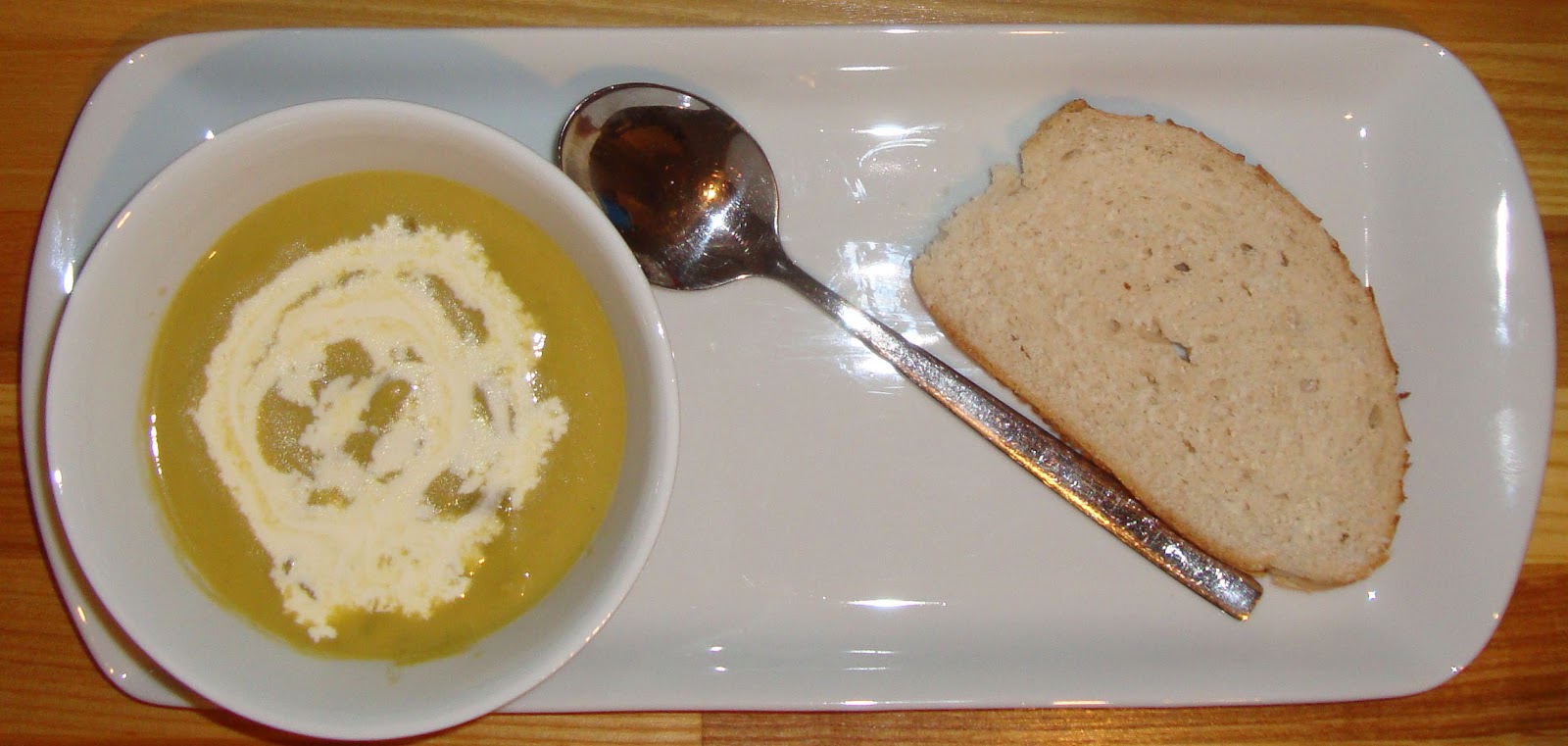
Leek and Potato Soup
1oz Butter
500g Leeks
300g Potatoes
2 Carrots
3 Cloves Garlic
½ pint chicken or vegetable stock
2 tbsp Double Cream
Salt and Pepper to taste
 
Chop white 2/3 of each leek roughly, slice carrot and add to stock with crushed garlic gloves. Add only enough water to cover, bring to boil and simmer for 2 hrs on a gentle heat. Liquidise and season to taste. Be generous with the pepper as it needs a little heat.

Add 2tablespoons of cream and the remaining green leek part (quarter each stem and slice into 1 inch pieces.)
 
Tip:
  • If the soup tastes a little weak simmer gently after liquidising to reduce its volume before adding the cream. It sounds simple but soups do have a sweet spot with regard to seasoning and volume.
  • Worth noting that the taste before and after liquidising is so very different; so judge the final taste after liquidising.
  • Using the whitest part of the leek give a paler soup to which the green parts added later contrast.
Variations:
You could add a small amount of chicken or bacon to the liquidised mixture but hey give the animals a break.


Blueberry and Grape Jam
1oz Butter
800g Grapes (any colour)
2 Desert Apples
Juice of 1 Lemon
1.5kg / 3lb Sugar
2lb / 800g Blueberries

This will make 3 jars with a capacity of 500g / 1lb

Wash grapes and add to pan with juice of lemon and roughly chopped apples (no need to peel.) Add enough water to cover and simmer for 2-3 hrs and then strain overnight. You should have roughly 1 pint of juice.

In a large pan heat sugar, grape juice and blueberries to a rolling boil. Stir occasionally till the boil is achieved and measure set point with a thermometer. This is a wet jam so ensure enough liquid boils off before bottling. Whilst this is happening sterilise the jars in a moderate oven. Pour the jam into the hot, sterilised jars; add wax caps if you want, and let it cool. Label with date and use within 6 months.

Tip:
Don’t trust the thermometer reading (I always go 1 -2 degrees higher) - check the jam set on a cold plate placed in the freezer. Allow to cool and push your finger across the surface. If it is ready it will wrinkle and appear congealed. However at the end of the day it will be always be a softer set jam.


Just sent this to a friend - a Christmas menu for a Downton theme but you'd have to have watched it to understand


Aperitif and savoury appetisers from the Dowager Duchess

Starter – Mr Carson’s Red Peppers with Miss Hughes popped cherry tomatoes al la Piedmont style

Fish Course - Trio of Downton Mermaids
 
Mary Crawley’s hot and cold Prawns
Edith Crawley’s Salmon on a single bed of Cauliflower Puree
Sybil Crawley’s Toast with Crab pate

Main Course 1
The Earl and Countess of Grantham’s Roast Turkey served with all the trimming
 
Main Course 2
Isobel Crawley and Ethel Park’s well and truly cooked Goose with all the trimmings

Dessert
Mrs Patmore’s Plum Pudding with Daisy Mason’s fresh white custard

Followed by
Miss O’Brien’s sharply acid cheeses with homemade biscuits and scandalous chutneys

Thomas Barrow’s Dark Secret Coffee and Mr and Mrs Bates Christmas cake in the servants Hall

Wednesday, October 24, 2012


Mary did not think that the world was her playground; she knew it was! Even though the money was always counted in on time, it was would be spent so quickly but she said there was always more from somewhere. Not that she minded about money for a moment when she was younger. A good looking girl from a solid family background could, (and still can) go much further than anyone else. Somebody once asked her if she thought about a time in the future when the attention, money and endless pleasure-seeking could possibly stop. She remembered laughing at the notion, because simply put, her deliberations led her to believe she was so much better than such a possible outcome. In actual fact it was true, because the instinctive belief in her abilities was the underpinning to it all.
It was a fine life really with her assets and income and just enough understanding of attraction to make it all work. For Mary men were the key to her unlocking the world. Although the career at the bank was hardly the stuff of dreams she enjoyed the work and it gave her so many opportunities to meet with wealthy males of her own age group. In a short time she gained something of a reputation. Not a bad one of course; she was so much classier than all that. It always seemed incredible to me that she attended so many events, dances and balls without ever once being thought vulgar. A new week inevitably brought a new man and all of them were completely smitten by her grace and bearing and to be honest; her absolutely sparkling intelligence and sense of fun. Though some tried to take things further she wasn’t at all ready for a long term recital and had the most beautiful skill of gently letting them understand. Because in truth, all bona fide men who are honest; naturally want and need a strong, independent woman.
Was I jealous? Well perhaps a little. But it was so hard not to genuinely like her and she was, and always remained my best friend. To be honest I think I basked in her glow somewhat. It was never intentional, but I soon came to realise she had something that was never coming my way in this lifetime. Some people rapidly understand that we cannot learn some social behaviours because they flow effortlessly from people as a natural consequence of their personality. As an example; they say that if you have to think during a conversation about what to say next, it is better generally not to say anything at all. A good rule of life I suppose and it usually meant I kept quiet a lot in most conversations.
I think also her thoughts were on a much bigger scale than mine. If a benefit of being her friend was a wider social group and lots more events to attend then I was not going to be downhearted about it.  I miss her terribly now she’s gone. I loved her so much.  
Goodnight dearest daughter.

Badger Cull U-Turn

Farmers were expected to start shooting badgers in west Somerset and west Gloucestershire this week to stop the spread of alleged bovine tuberculosis. But a statement to the House of Commons, said the cull will have to be delayed because farmers are not ready. The cull had been delayed by the Olympics and Paralympics because not enough police were available to manage protests until after the events had finished. The weather has also made it difficult for farmers to find the time to bait setts and carry out surveys. In addition, a survey last week showed that the number of badgers in the cull areas has increased, with 4,300 in west Somerset and 3,600 in west Gloucestershire. At least 70 per cent of badgers (or 5530 of them) must be removed from an area for there to be a reduction in TB in cattle.

Somebody has pointed out that in contrast the Netherlands, Germany, Belgium and France all have badgers but NO major issues with bovine TB. The real question now in reality is if the UK cattle have infected the badgers in the first place and not the other way around. TB originating due to bad husbandry and poor stock movement controls.

In another related issue that is almost now given approval by this stupid planned cull two men have been arrested in Lancashire following a series of police raids linked to badger baiting. The operation followed reports from the Helmshore area that a number of men had been digging badgers from setts and then throwing them to dogs. A dead badger with a shotgun wound to the head was later found at the site.

I guess they just couldn’t wait for the cull to begin – what a sad world we live in! Animals today people tomorrow.

http://www.telegraph.co.uk/earth/earthnews/9627975/Badger-cull-delayed-as-minister-blames-weather-and-Olympics.html

Tuesday, October 23, 2012


I can offer my outstretched arm and yet who will take it? When the wind blows ever colder and the north begins to freeze; who will keep me warm on these senseless nights that are wreathed in the breath of winter to make of each hour a lifetime that falls into the embrace of the imminent winter. We wait for dawn and though it is colder than the night, still it comforts to see the renewed light of a new day pierce the gloom and bring me hope.

Caramelised Red Onion Chutney

This will make 2 jars with a capacity of 500g / 1lb

2 oz butter
9 Red onions (finely sliced)
3 Chillies (finely chopped)
Small piece of Ginger (finely chopped)
250ml Rose
300ml White Wine Vinegar
200g Dark Brown Sugar (Muscovado)

  • Slice your onions finely, (a mandolin is ideal) and chop chilli and ginger finely and put into a pan with the melted butter. Cook gently over a low heat for about 20-40 minutes until caramelised. Add the rose and reduce till the onions are rich and dark and somewhat sticky
  • Add sugar and the vinegar and simmer moderately for 30 minutes or so, until the chutney is thick and dark. Whilst this is happening sterilise the jars in a moderate oven. Pour the chutney into the hot, sterilised jars and let it cool. Ideally, you should leave it for a month or more before you eat it, to mature in flavour.
Tip:
  • To tell if the chutney is ready draw a spoon down the centre of the pan and if the mixture does not run together again for a count of 5 it is ready.
  • If you want finer chutney cut each onion in half before slicing
  • This compliments acidic cheeses so use to make goats cheese tarts or on the cheeseboard.


Leek and Ham Quiche
 
10 inch quiche pan (preferably metal to avoid a soggy base)
300g / 12oz shortcrust pastry
25g / 1 oz butter
6 Medium leeks (white ends)
200g/ 8oz Extra mature Cheddar
150g / 6oz Cooked Ham
3 eggs
120ml / ¼ pt double Cream
Salt and Pepper
Method
  • Wash leeks and trim off roots if needed. Cut each leek in half and reserve the leafy, greener top section for soup etc.
  • Using the bottom whiter root parts cut each leek in quarters lengthways and then into sections of approx 1 inch.
  • Cook leek pieces slowly in butter in a large frying pan till slightly golden and soft (but not burnt.)
  • While leeks are cooking
  • Line quiche pan with the shortcrust pastry – leave the edges overhanging the pan
  • Beat eggs and cream together in a bowl with salt and pepper. Cut cheese into roughly 1cm pieces and then roughly chop over with a knife to give a nice crumb.
  • Add cheese to cooked leeks and stir together. Add to pastry case. Trim the pastry case level to top of quiche pan and add the egg and cream mixture.
  • Bake for 30-40 mins at 180C (fan) 200C non fan oven. If needed rotate quiche after 20 minutes to ensure even browning.
Tip:
  • Do not overcook. Remove when top is firmly set but still has some spring.
  • Quiche pan should preferably be of metal to avoid an overly wet pastry base
  • For a vegetarian alternative add more leeks and omit the ham or substitute ham with red or a mixture of bell peppers, artichoke or fennel.
 
Can be eaten hot or cold but if serving cold allow it to come to room temperature for 10 minutes before serving.